The move to renewable energy is changing neighborhoods in the United States. Now, nearly five million homeowners use clean energy. If you’re thinking about solar panel installation, you’re part of a growing group that cares about the planet and saving money.
But, getting to energy independence needs careful planning. Your choice of solar-panel-financing affects your long-term money and investment returns. Making the right choice now helps you get the most value from your system.
Understanding federal incentives and local rebates can be tough. By knowing your solar-panel-financing options, you can make your solar panel installation a financial win. Getting ready the right way can lead to big savings for your home.
Key Takeaways
- Nearly five million U.S. homes have adopted solar power.
- Strategic payment planning is essential for maximizing your return on investment.
- Federal and local incentives significantly lower the total cost of ownership.
- Choosing the right payment structure impacts your long-term savings.
- Proper research helps you navigate complex energy rebates effectively.
Assessing Your Solar Potential and Financial Readiness
Starting to use renewable power begins with knowing your energy habits. Before getting a solar energy system, you need to see how you use electricity all year. This helps make sure your system fits your needs perfectly.
Evaluating Your Home Energy Consumption
Start by looking at your past utility bills to find your average energy consumption. Look for times when you use more, like in summer for air conditioning or winter for heating. Knowing these patterns helps figure out how big your system needs to be.
- Gather at least 12 months of electricity statements.
- Identify your average monthly kilowatt-hour (kWh) usage.
- Note any planned home improvements that might increase your future power needs.
Determining Roof Suitability and Sunlight Exposure
Your rooftop solar potential depends on your home’s roof. A pro will check the roof’s direction, slope, and any blocks. Ideally, roofs facing south in the Northern Hemisphere get the most sunlight.
Also, think about things outside that might cut down your energy. Trees, chimneys, or buildings next door can block sunlight. A site check will tell if your roof is good for solar panels.
Setting a Realistic Budget for Your Solar Project
After knowing your energy needs and roof situation, set a solar project budget. This plan should cover costs for equipment, installation, and upkeep. Setting clear financial goals early helps avoid surprises later.
When setting your budget, remember:
- The total cost of hardware and mounting systems.
- Local incentives that can lower your initial cost.
- Financing costs if you take out a loan.
“Proper planning is the foundation of every successful renewable energy transition.”
Understanding Solar-Panel-Financing Options
Choosing the right path for your home solar system depends on your long-term financial goals and current liquidity. The world of solar-panel-financing can seem overwhelming. But, breaking down the primary methods makes the decision clearer. You have several distinct routes to power your home with clean energy.

Exploring Solar Loans and Credit Unions
A solar loan lets you own your equipment over several years. Many homeowners choose this because it allows them to claim federal tax incentives directly. You can find competitive rates through local credit unions or specialized green energy lenders.
By securing a loan, you build equity in your property as you pay down the balance. Once the loan is fully paid, your electricity costs drop significantly. You’ll have virtually free power for the rest of the system’s life.
Comparing Solar Leases and Power Purchase Agreements
If you prefer to avoid upfront costs, a solar lease might be right for you. In this arrangement, a third party owns and maintains the panels on your roof. You pay a fixed monthly fee for the energy produced.
Similarly, power purchase agreements (PPAs) involve a contract where you buy the electricity at a set rate. These options are great for those who want to save on utility bills without maintenance or repair costs.
Evaluating Cash Purchases and Home Equity Lines of Credit
Paying with cash is the most straightforward way to save long-term. By avoiding interest payments, every dollar goes directly toward your energy production. This method provides the highest return on investment over the system’s life.
If you lack immediate cash, a Home Equity Line of Credit (HELOC) is a popular alternative. It lets you leverage your home’s value to fund the installation at potentially lower interest rates than standard unsecured loans.
Pros and Cons of Financing vs. Buying Outright
Deciding between financing and buying outright requires looking at the total cost. For a typical 12 kW system, you might expect to pay around $30,505 before incentives. Buying outright eliminates debt but requires a significant initial investment.
- Buying Outright: Offers the best long-term savings and total control.
- Financing: Provides immediate access to renewable energy with little to no money down.
- Leasing: Simplifies the process by removing maintenance burdens from the homeowner.
The best choice depends on your financial flexibility and desire for system ownership. Weighing these factors ensures you select a plan that aligns with your household budget.
Leveraging Federal and State Incentives
Understanding solar financial support is key to saving money. By using different programs, you can drastically reduce your total installation costs and pay back faster. Knowing about these options early helps you not miss out on savings.
Maximizing the Federal Residential Clean Energy Credit
The federal residential clean energy credit is a big help for homeowners going solar. It lets you claim a big part of your costs as a tax credit. It is essential to note that the rules changed in 2026, especially for different ways of owning a system.
Check if you qualify with a tax expert, whether you own the system or have a special financing deal. Keeping your paperwork right ensures you get the most from this credit. Proper planning helps you use this credit to cut down your upfront costs a lot.
Identifying State-Specific Rebates and Tax Credits
Many places offer special financial help for solar energy. These can be rebates, payments based on how much you produce, or tax credits at the state level. Talk to your local contractor to find out what’s available in your area.
Good installers keep track of local incentives and can apply them to your project. Working closely with your contractor helps you get every discount possible. This makes the financial part of going solar much easier.
Understanding Net Metering Policies in Your State
Local utility programs can also save you money. Net metering lets you send extra power to the grid. You get credits that lower your future bills.
How Utility Credits Impact Your Monthly Bill
When you make more power than you use, it goes to the grid. Your meter tracks this, and you get credits on your bill. These credits lower your monthly bills, sometimes to just the minimum fee.
Net metering rules differ by state and provider. Understanding these regulations helps you predict your energy costs. By using the grid well, your home becomes a power plant that pays you back.
Calculating Long-Term Savings and Return on Investment
Looking at the true value of solar investment means more than just the cost. By checking your return on investment, you can see it’s a wise choice. This helps you move to clean energy confidently.
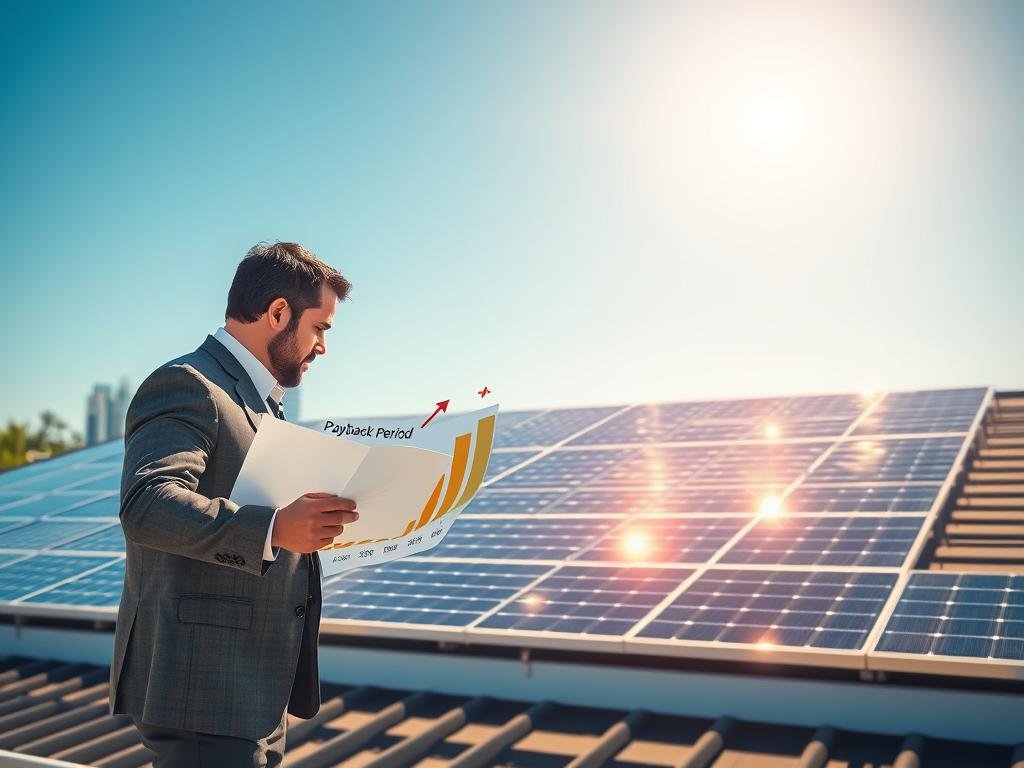
Estimating Your Payback Period
Figuring out your solar payback period shows how well your system works over time. It’s the time it takes for savings to cover the system’s cost. Most homeowners see their systems pay off in seven to ten years.
To find this, divide the system’s total cost by your yearly savings. Once you hit this point, your system’s power is free. This is when your solar savings really start.
Analyzing Energy Price Inflation and Future Savings
Utility rates don’t stay the same. When you consider energy price inflation, your investment looks even better. As electricity costs go up, so does the value of your system’s power.
By fixing your energy costs now, you shield your budget from future price hikes. This makes your system pay off faster. So, your solar savings grow as utility prices rise.
Assessing the Impact on Property Value
Solar panels do more than save you money. They also boost your property value. Energy-efficient homes are more attractive to buyers. A good solar system makes your home stand out.
Research shows homes with solar sell quicker and for more money. This return on investment comes from both savings and a higher home price. Solar is a smart choice for now and the future.
Navigating the Installation and Financing Process
After securing funding, the real work starts. This phase needs diligent oversight to keep your project on track and safe. By staying involved, you protect your investment and ensure long-term performance.
Selecting a Reputable Solar Installer
Choosing the right solar installer is crucial. Look for companies with strong local reputations and valid licenses. A qualified professional will handle your home solar system with care.
“Quality is not an act, it is a habit.”
Before signing, ask for references from local clients. Make sure they have experience with your roof type and local codes. A good solar installer will explain the installation process clearly.
Reviewing Financing Contracts and Terms
Read every page of your financing contract carefully. Look for hidden fees or payment escalators that could increase costs. Understanding these terms is key to your home solar system‘s financial health.
- Check for early repayment penalties.
- Confirm the interest rate is fixed.
- Verify all equipment warranties are included.
Don’t hesitate to ask for clarification on confusing terms. Transparency is essential for a successful partnership. Make sure the agreed terms are in the final paperwork.
Managing Permits and Utility Interconnection
The final step is getting local permits and completing the utility interconnection process. Your contractor usually handles this, but stay informed. This ensures your system is legal and safe.
The utility interconnection process is key for net metering. Once approved, you can start generating clean energy. Proper coordination prevents delays and gets your home solar system ready to power your life.
Conclusion
Switching to renewable power is a big step for your wallet and the planet. You now know how to handle complex financial situations with ease.
Your journey to energy freedom begins with clear goals. Companies like Sunrun or Tesla can guide you. Choosing the right option for your finances is key.
Keep an eye on your local utility rates and local incentives. This helps you stay on top of changes. Making small changes now can save a lot in the long run.
Get quotes from local installers to fit your roof and energy use. Taking action now helps you use federal and state credits. Your choice of clean energy will save money and benefit your home for years.