Switching to green infrastructure is a big step for any business today. You need to understand project finance well to stay strong in the long run. Without a clear plan, finding the right money can seem too hard.
The U.S. Department of Energy’s Office of Energy Efficiency and Renewable Energy is here to help. They have financial assistance opportunities for businesses and schools to improve energy use. These resources can help you get past big hurdles and grow faster.
Finding the right renewable-energy-financing is key to making your green dreams come true. Good planning lets you match your energy goals with federal programs. This way, you can lead in a green market that’s getting more competitive.
Key Takeaways
- Understand the critical role of capital in sustainable infrastructure development.
- Access financial assistance programs offered by the U.S. Department of Energy.
- Learn how to navigate complex funding structures for commercial success.
- Identify and overcome common barriers to implementing energy-efficient strategies.
- Align your long-term business goals with available federal support opportunities.
Preparing Your Business Case for Renewable Energy Financing
Creating a strong business case is key to your journey to sustainable energy. Clean technology projects need a lot of capital intensity. You must plan carefully to get funding. Aligning your energy upgrades with your financial goals makes a strong case for investors.

Conducting a Comprehensive Feasibility Study
First, check if your project is worth it. A detailed feasibility study is the base of your financial plan. Use the ENERGY STAR Financing guide to check if your energy projects are financially sound.
This step looks at your energy use and possible savings. It also checks technical needs early to avoid surprises. A solid study shows lenders you’ve done your homework.
Calculating Projected Return on Investment and Payback Periods
Lenders want to see your project will pay off. Calculate your return on investment (ROI) and payback period. This is crucial for big projects like commercial solar projects.
Right projections help manage cash flow and savings. Make sure your figures are based on real energy prices and maintenance costs. Transparency in your numbers builds trust with lenders.
Assembling Necessary Financial Documentation
After you’ve got your numbers, organize your documents well. Lenders need a detailed cost breakdown, utility bills, and your company’s financials. Big projects need more scrutiny, so keep your records clear and easy to find.
- Detailed project budget and cost estimates
- Historical energy usage data for the past three years
- Proof of site ownership or long-term lease agreements
- Comprehensive financial feasibility reports
Having these documents ready shows you’re ready for the application process. It makes the review easier for your partners and speeds up approval for your commercial solar projects. A professional presentation can get you better financing terms.
Evaluating Different Renewable Energy Financing Models
Choosing the right financing model is key to the success of your commercial solar projects. You need to consider the costs, risks, and who owns the system. This helps you match your energy goals with your financial plan.
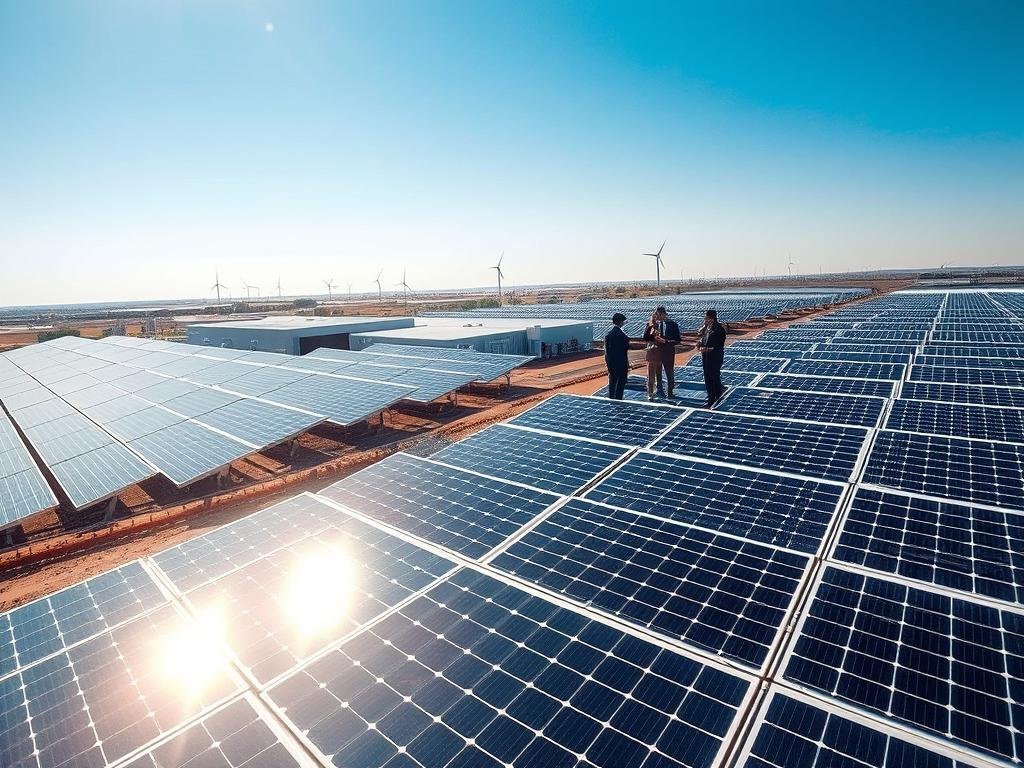
Understanding Power Purchase Agreements
A Power Purchase Agreement (PPA) is a common choice. A developer installs and maintains the system on your property. You agree to buy the electricity at a set rate, often cheaper than what utilities charge. This model is highly effective because it uses the credit of utility companies to lower your costs.
Solar projects usually need power purchase agreements to get funding. These contracts provide stability for lenders. They also take the risk off your business.
Exploring Equipment Leasing and Solar Loans
If you want to own your solar assets, consider equipment leasing or loans. Leasing lets you use the equipment without a big upfront cost. You pay a monthly fee, which helps keep your cash flow for other needs.
Solar loans work like regular business debt. You borrow to buy the system outright. This option is good if you have a strong financial position and want to save money in the long run.
Assessing Property Assessed Clean Energy Financing
PACE financing is a special way to fund energy upgrades. It uses a property tax assessment to pay for the installation over time. It’s great for businesses looking to upgrade without using up their cash.
Benefits of PACE for Commercial Property Owners
The main benefit is that the financing is tied to the property, not your business. If you sell the building, the new owner might take over the payments. PACE financing also offers longer terms, which can lead to immediate savings if your energy costs drop.
Limitations and Eligibility Requirements
While appealing, PACE has its own rules. Lenders look at your property’s equity and if your area has an active program. Always check with a financial advisor to see if your project fits local rules.
Navigating the Application and Due Diligence Process
The path to project finance success starts with careful preparation. You need to be open with lenders. Once your business case is strong, you move to the formal application phase.
This stage needs a disciplined approach. Your project must meet the high standards of financial institutions.
Selecting the Right Financial Partner
Not all lenders know about renewable energy infrastructure. Choose partners who understand your technology’s needs. They offer more than money; they give strategic guidance for your investment’s life.
- Evaluate their track record with similar renewable energy assets.
- Assess their willingness to provide long-term support.
- Confirm their familiarity with local and federal energy policies.
- Review their history of closing complex infrastructure deals.
Preparing for Lender Credit Requirements
Lenders often use non-recourse debt for renewable projects. This means they focus on the project’s future cash flows, not your company’s assets. Your financial projections must be strong and defendable.
“The strength of a project’s cash flow is the ultimate determinant of its creditworthiness in the eyes of a lender.”
Show that your project can make consistent revenue, even in tough markets. Clear, audited financial statements build trust with lenders.
Managing Technical and Legal Due Diligence
The due diligence process checks for potential liabilities before funding. Lenders will look at your engineering designs, site permits, and power purchase agreements. Keep all important documents in a centralized data room for easy access.
Get experienced legal and technical consultants early to avoid delays. They ensure your project meets environmental regulations and contractual obligations. Keeping things organized is key for a smooth approval process.
Mitigating Risks for Potential Investors
Addressing concerns early can secure better lending terms. Show investors you’re in control of the project’s future. Good risk management includes plans for supply chain issues or regulatory changes.
Reducing uncertainty makes your project more appealing for non-recourse debt. This approach simplifies the due diligence process and boosts your credibility. Your risk management skills affect the cost and availability of your project finance package.
Leveraging Tax Incentives and Government Grants
To cut down on costs for your commercial project, use government financial help wisely. Clean energy incentives can make your renewable energy investment more profitable over time. These programs help businesses switch to sustainable power more easily.
Maximizing the Investment Tax Credit
The investment tax credit is a key tool for businesses. It lets you subtract a big part of your costs from your taxes.
Here’s how to get the most out of it:
- Make sure your project fits the federal rules.
- Talk to a tax expert to find out how much credit you can get.
- Plan your project so it meets the credit’s deadlines.
Utilizing Modified Accelerated Cost Recovery System Depreciation
MACRS depreciation is another big help. It lets you write off your equipment costs faster than usual. This means you pay less taxes early on.
By doing this, you get more money sooner. This strategic move helps pay for big renewable projects.
Identifying State-Specific Renewable Energy Rebates
Local support can make a big difference. Use the Database of State Incentives for Renewables and Efficiency (DSIRE) to find renewable energy rebates for your area.
DSIRE is a great resource for:
- State grants and incentives.
- Utility rebates for solar or wind projects.
- Local tax breaks or financing options.
How to Coordinate Incentives with Private Financing
Combining government help with private money needs careful planning. Make sure your financing plan works with the timing of tax credits and rebates. These funds usually come after you’ve already spent money.
Here’s how to match your financial plan:
- Talk about incentive timing with your lender early on.
- Use temporary loans to cover costs until MACRS depreciation kicks in.
- Make a detailed plan that includes renewable energy rebates as key funding sources.
Conclusion
Switching to clean energy needs a smart plan for money use. Learning about renewable-energy-financing helps cut costs and meet green goals.
You know how to look at loan options and tax breaks now. Using this info, you can build a strong, green infrastructure. This will save you money for years.
Companies like NextEra Energy and SunPower show how investing wisely can grow your business. By choosing these projects, you show you’re forward-thinking to others.
Start by checking your energy audit data today. Working with experts in renewable-energy-financing makes sure your plan fits your business needs.
Talk to your financial advisors about these chances. Your journey to energy freedom begins with a smart investment.