Building a custom house is an exciting journey. It turns your vision into reality. But, it requires careful planning and a solid budget.
You must navigate various financial hurdles. This ensures your home construction project stays on track. It goes from the initial blueprint to the final inspection.
Specialized mortgage programs provide the necessary foundation for your build. By using new-construction-financing, you get funds for both land and building costs. Understanding these unique tools helps you approach your home construction with clarity and peace of mind.
Key Takeaways
- Specialized loans cover both land purchase and building expenses.
- Proper planning prevents budget overruns during the building process.
- Lenders offer specific programs tailored to custom residential projects.
- Financial clarity is essential for a smooth building experience.
- Working with experienced lenders simplifies the approval process.
Understanding the Basics of New-Construction-Financing
Starting a custom home build means you need to understand special financing. It’s different from buying a ready-made house. New-construction-financing helps turn raw land into a home.
Why Traditional Mortgages Differ from Construction Loans
Traditional mortgages are for buying existing homes. They’re long-term loans with a fixed property value. On the other hand, a construction loan is for building a home. It’s a short-term loan for land, labor, and materials.
Since the home isn’t built yet, lenders take more risk. So, these loans have variable rates and interest-only payments during construction. After the home construction is done, the loan usually turns into a permanent mortgage or is paid off.
The Role of the Builder and Lender Relationship
The success of your project relies on a good builder-lender relationship. Lenders need a clear partnership to manage funds well during the build.
Your lender will check the builder’s credentials and project details before approving the construction loan. This ensures your investment is safe. Keeping in touch with your builder and lender is key to staying on track and budget.
Evaluating Your Financial Readiness for a Custom Build
Starting a custom home project needs more than just a dream. It requires a strong financial base. Before you start, check if your money is ready for the loan’s demands. Reviewing your finances now can save you a lot of stress later.
Assessing Your Debt-to-Income Ratio and Credit Score
Lenders look for stability when they review construction loan applications. Your debt-to-income ratio shows if you can handle mortgage payments and other debts. Keeping this ratio low can help you get better loan terms.
Your credit score also matters a lot. A higher score can get you better interest rates. This can save you a lot of money over time. Check your credit report often to fix any mistakes before applying.
Calculating Total Project Costs Beyond the Base Price
Many people only look at the builder’s base price. But this price doesn’t include everything. You need to add costs for site prep, permits, and building materials. Not including these can leave you short on money during the project.
Accounting for Upgrades and Change Orders
It’s easy to want extra features or changes during construction. But these upgrades and change orders can cost more than expected. Make sure to save extra money for these extras to avoid using up your main loan funds.
Budgeting for Unexpected Construction Delays
Even the best plans can hit unexpected problems. Weather, labor issues, or building material shortages can cause delays. Building a contingency fund of 10% to 15% of your budget is key. It helps protect your custom home from these delays.
Exploring Construction-to-Permanent Loan Programs
A construction-to-permanent loan makes funding your new home easier. It combines your building costs and long-term loan into one package. This avoids the need for multiple loans and saves on closing costs.
How Single-Close Loans Simplify the Process
A single-close construction loan simplifies your building journey. You only need to go through underwriting once. This saves time and reduces paperwork.
It also lets you lock in your interest rate early. This protects you from rate changes before your custom home is done.
After your home is built, your loan turns into a permanent mortgage. This means no second closing or extra credit checks. It gives you peace of mind, knowing your financing is set while you focus on your build.
Managing Interest-Only Payments During the Build Phase
During the construction phase, you make interest-only payments on disbursed funds. This is great because it keeps your monthly costs low. You’re only paying interest on the money given to your builder, not the whole loan.
This lets you spend more on quality materials or upgrades for your custom home. It keeps your monthly payments low during the construction phase. Once done, your payments will include both principal and interest as you start paying off your permanent mortgage.
Leveraging Government-Backed Construction Loan Options
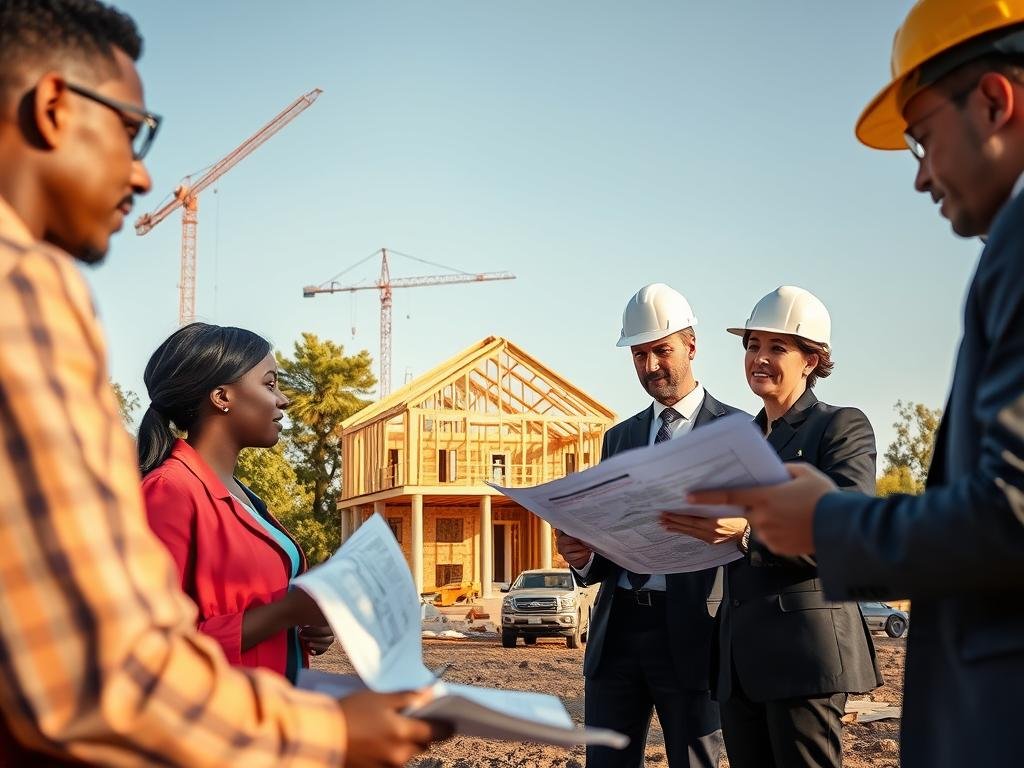
Building a new home can be daunting, but government-backed loans offer a solid financial base. These loans make it easier to own a home by offering flexible terms and lower entry barriers. Choosing a government-backed construction loan can get you better rates and more stable terms than private loans.
Utilizing FHA One-Time Close Loans
The FHA One-Time Close program is a favorite because it combines construction and permanent mortgage into one. This streamlined approach saves on closing costs and simplifies loan management. You’ll need a good credit score and a manageable debt-to-income ratio to qualify.
- Single closing process reduces total fees.
- Lower down payment requirements compared to conventional loans.
- Fixed interest rates provide long-term stability.
Benefits of VA Construction Loans for Veterans
VA-backed loans offer top terms for veterans and active-duty service members. They often require no down payment, saving your money for other project costs. Plus, many VA lenders allow interest-only payments during construction, keeping monthly costs low.
The VA construction-to-permanent loan is designed for those who have served. You’ll still need to meet lender standards for credit score and debt-to-income ratio. But the benefits make it a great choice for custom home building.
Requirements for USDA Construction-to-Permanent Financing
The USDA has a construction loan program for rural and suburban areas. It’s perfect for building in less crowded places with government-backed support. This is a construction-to-permanent loan, so you can move straight to your long-term mortgage without re-qualifying.
To get USDA financing, your project must be in a rural area. You can make interest-only payments during construction. This helps manage your budget while your builder finishes your new home.
Navigating the Lender Approval Process
Getting a construction loan is a detailed process. It’s different from getting a mortgage for an existing home. Your mortgage loan officer must assess the value of a property that doesn’t exist yet. You need to be open and organized to make this process easier.
Submitting Detailed Blueprints and Specifications
Lenders need detailed documents to feel secure before approving your loan. You must give them professional blueprints and a list of materials. This helps the bank check if your project meets safety and zoning rules.
Precision is vital at this stage. If your plans are not detailed, the lender might hold up your application. A clear budget and detailed plans help the bank understand your project fully.
The Importance of Builder Vetting and Approval
Choosing the right contractor is as crucial as your financial situation. Lenders check the contractor’s background to ensure they can finish the project on time and within budget. They look at the contractor’s license, insurance, and past work.
This step protects you and the lender from construction delays or financial issues. A mortgage loan officer will check the contractor’s financial health. Working with a trusted builder makes getting loan approval simpler.
Managing the Draw Schedule and Disbursement Process
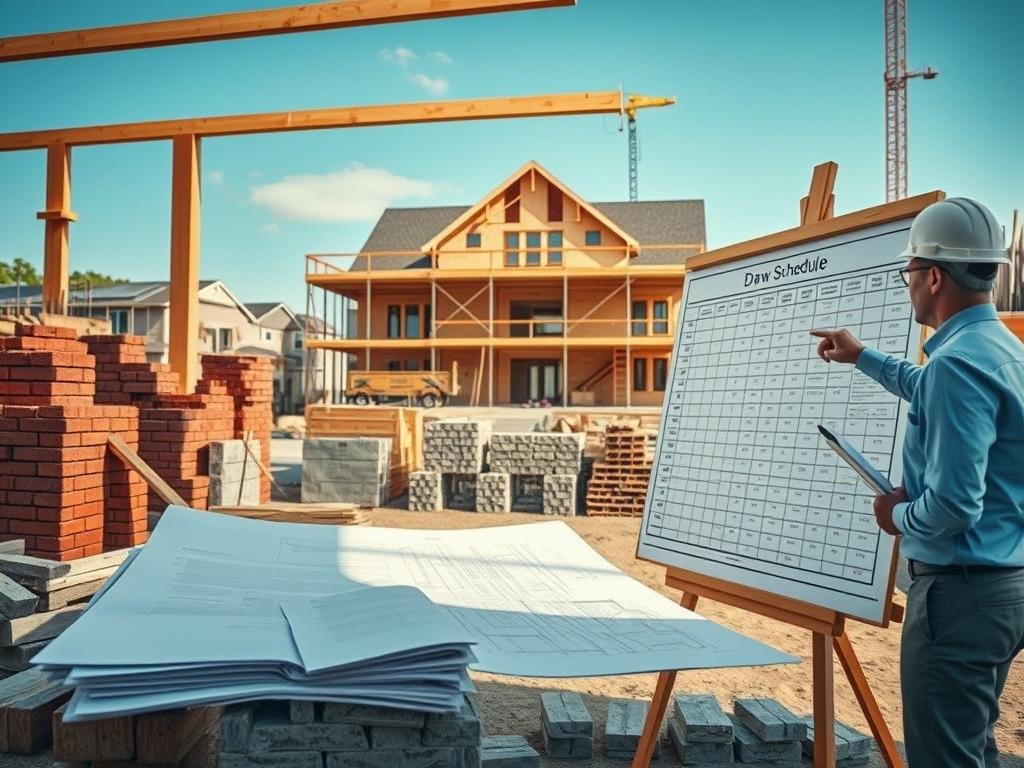
Knowing how funds are released is key to protecting your investment. Your lender doesn’t give you the whole loan at once. Instead, they use a draw schedule to give out money in stages as your home meets certain milestones.
Understanding How Lenders Release Funds to Builders
The draw schedule is like a financial guide for your project. It shows when payments are made, usually when big parts like the foundation, framing, or roofing are done.
This method makes sure your builder has enough money to buy building materials and pay subcontractors. It ties payments to progress, reducing risk and keeping the project on track.
“A goal without a plan is just a wish.”
The Role of Inspections in Releasing Payments
Before any money is given out, your lender needs a formal inspection. This is crucial to check if the work done matches the original plans and specs.
The inspector checks if the building materials used are up to code and quality standards. This step has many benefits for you:
- It makes sure your contractor is only paid for work that’s been done and checked.
- It stops the builder from asking for too much money before the milestones are reached.
- It gives you a record of your home’s progress.
By being involved in this process, you can keep your project on track. Clear communication between you, your builder, and your lender is essential to avoid delays and keep things moving smoothly.
Mitigating Risks During the Construction Phase
To protect your dream home, use smart risk management. The construction phase is exciting but needs careful watching. Stay organized and informed to control your budget and timeline.
Securing Rate Locks for Your Permanent Mortgage
Market changes can hurt your finances if you’re not ready. Locking in your permanent mortgage rate early shields you from rate increases. This lets you focus on the build without worrying about payment changes.
Lenders offer special rate locks for new builds. Talk to your loan officer about these before signing. Locking in your rate keeps your finances steady throughout the project.
Handling Cost Overruns and Contingency Funds
Unexpected costs can happen in any build. A strong contingency fund is key to handle these without delays. Aim to save 10% to 15% of your budget for emergencies.
Good risk management starts with choosing the right builder. A clear builder will explain the draw schedule and all costs. Follow these steps to keep your project safe:
- Review all change orders in writing before work starts.
- Keep a special savings for emergency repairs or price hikes.
- Make sure your builder has enough insurance for the project.
- Check the site regularly to ensure quality work.
Watch your budget closely and talk openly with your builder. Regular checks help keep your dream home a good investment from start to finish.
Conclusion
Building a custom home needs careful planning and knowing your finances well. You now know how to handle construction budgets and understand loan structures. This gives you confidence.
Success comes from working closely with a trusted mortgage loan officer. They guide you through getting funding. They make sure your documents are correct for easy loan approval.
Stay on top of your finances and talk openly with your builder. These steps protect your investment and keep your project on track. You’re ready to create a home that shows off your style.
Contact a local lender to talk about your needs. This move brings you closer to getting the keys to your new home. Your dream home is closer when you use these strategies in your financial planning.